

 全國服務熱線
The preparation of PVP is based on vinylpyrrolidone NVP. Stability: Stability under normal temperature and pressure. State: hydrophilic, easy-flowing white or almost white powder with slight odor. Solubility of PVP: very soluble in water and halogenated hydrocarbon solvents, alcohols, amines, nitroalkanes and low molecular fatty acids, etc., insoluble in a few solvents such as acetone, ether, turpentine, aliphatic hydrocarbons and alicyclic hydrocarbons . Compatible with most inorganic acid salts and various resins. The polymerization route of PVP production is that the polymer is not easy to diffuse. N-2-Pyrrolidone NVP is solution polymerized in a solvent, and then steam stripped. Obtained by bulk polymerization, solution polymerization and other methods. NVP monomer and water-soluble cationic, anionic or non-ionic monomers are polymerized in aqueous solution. In the bulk polymerization preparation process, due to the high viscosity of the reaction system, the polymerization reaction heat is not easy to remove, resulting in local overheating, etc., the resulting product has low molecular weight and high residual monomer content, and it is mostly yellow, not too large. practical.
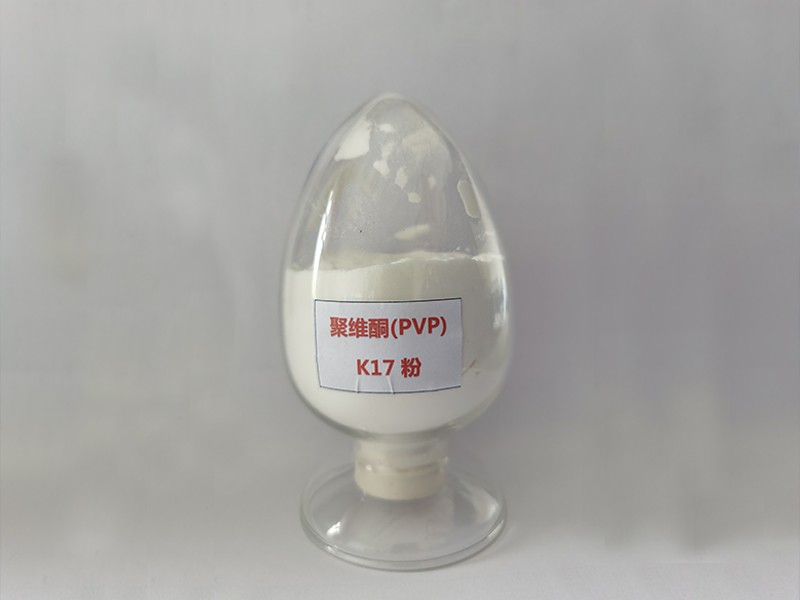
The industry generally uses solution polymerization to synthesize PVP. Cross-linked homopolymer of pure vinyl pyrrolidone. It has the ability of polyvinylpyrrolidone PVP to complex with various substances, such as various alcohols that cause the discoloration of wines and other beverages. And because of its insolubility, it is easy to remove after filtration.
Heat the NVP monomer directly to above 140°C, or add an initiator to the NVP solution for heating, or the solvent in the NVP solution can be water, ethanol, benzene, etc. Add initiator to polymerize by free radical solution, or directly irradiate with light PVP homopolymers can be obtained from NVP monomers or their solutions. Different polymerization methods result in different polymer structures and properties. Among them, the polymer composition and structure obtained by free radical solution polymerization are relatively uniform. The performance is also relatively stable. It is a common method for NVP homopolymerization. By adjusting the reaction conditions such as monomer concentration, polymerization temperature, initiator dosage, etc., PVP homopolymers with different molecular weights and different water solubility can be obtained.
Process 1: Configure NVP into a solution with a mass fraction of 50%, use a small amount of hydrogen peroxide as a catalyst, and initiate polymerization at 50°C under the action of azobisisobutyronitrile, so that almost all NVP is converted into PVP. Then add ammonia water to the polymer to decompose the remaining azobisisobutyronitrile, the monomer polymerization conversion rate, and the solid content is 50%.